
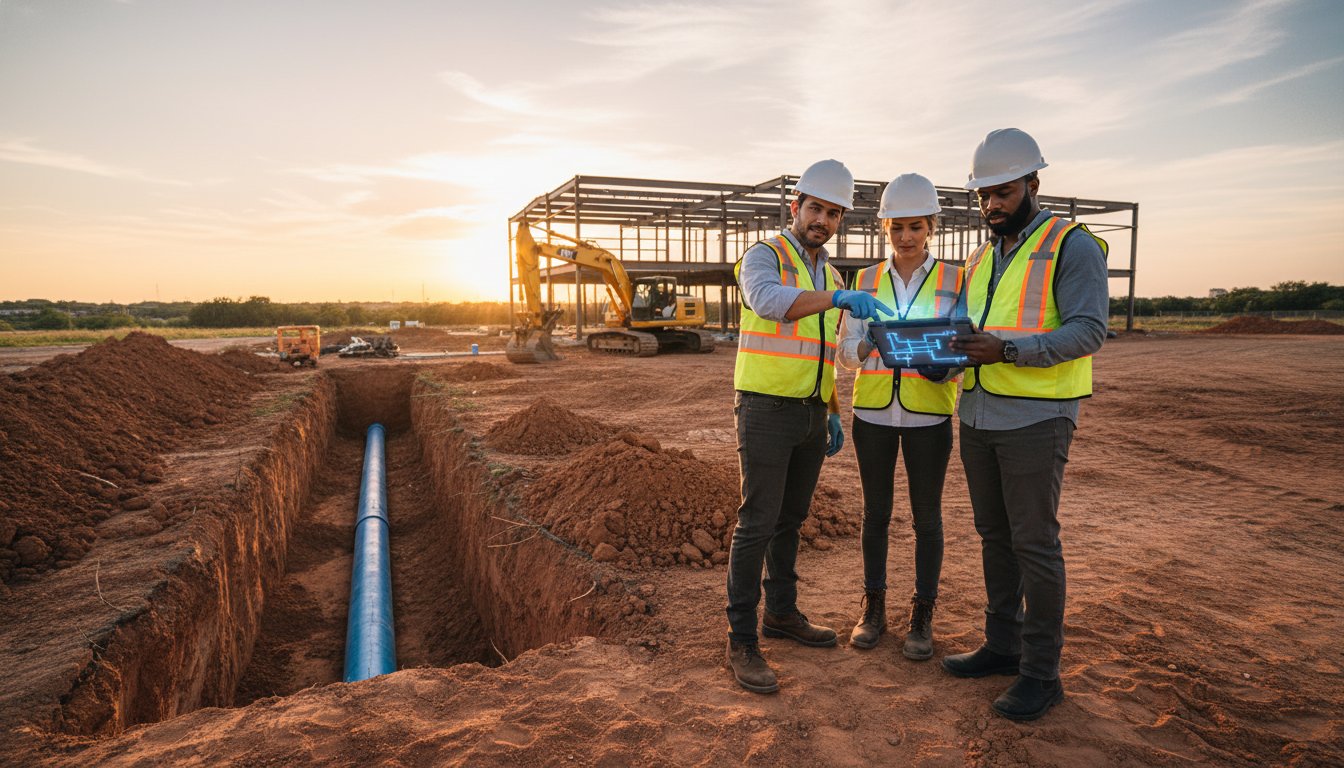
In the state of Texas, the long-term viability of a commercial development often depends more on the stability of the infrastructure buried beneath the surface than the structures built above it. You likely recognize that a domestic water line installation in Texas is far more than a routine plumbing connection; it is a rigorous civil engineering undertaking. Between the relentless movement of expansive clay soils and the tightening of TCEQ regulations, there is little room for error when establishing a site's primary water service.
We understand the pressure of coordinating utility work alongside mass excavation and paving while staying compliant with the 2024 International Plumbing Code updates. This guide provides the technical framework necessary to achieve regulatory alignment and lasting structural integrity. We will explore the critical requirements for pipe depth and separation; the impact of recent TSBPE rule changes; and the engineering strategies required to protect your investment from the unique geological challenges of the Texas landscape.
Key Takeaways
- Identify the distinct engineering standards for domestic water lines to maintain long-term reliability and system performance.
- Align project specifications with TCEQ Chapter 290 while implementing soil management strategies for expansive Texas clay.
- Execute a domestic water line installation Texas using precise excavation methods and strict adherence to OSHA trench safety protocols.
- Verify system integrity through hydrostatic pressure testing; this step ensures an efficient and compliant municipal handover.
- Coordinate utility placement with broader civil site work to eliminate trade friction. This approach ensures seamless integration with detention pond construction.
Understanding Domestic Water Line Infrastructure in Texas Civil Projects
Within the scope of Texas civil site work, the domestic water line represents the primary artery for potable water delivery. It's the critical link between the municipal main and the commercial structure. Successful domestic water line installation Texas requires a clear understanding of where civil utility work ends and interior plumbing begins. Typically, the utility contractor manages the installation from the city tap to a point five feet from the building foundation. At this juncture, the master plumber assumes responsibility for the interior distribution. This division of labor ensures that heavy machinery and mass soil excavation don't compromise the delicate plumbing systems inside the structure.
The state's rapid population growth continues to place immense pressure on existing municipal resources. As cities like Frisco and Houston update their local codes to reflect the 2024 International Plumbing Code, developers must prioritize upgraded water distribution system infrastructure to maintain long-term viability. High-density developments require precision in both sizing and placement to ensure consistent pressure and volume for every tenant. We focus on establishing these foundations with a level of technical proficiency that anticipates future demand and minimizes the risk of service interruptions.
Domestic vs. Fire Line Systems
While they often share a common trench, domestic and fire line systems serve fundamentally different purposes and follow distinct regulatory paths. Domestic lines are sized based on peak demand for daily consumption, whereas fire lines are engineered to provide high-volume flow during emergencies. Texas municipalities require separate metering and specific backflow prevention protocols for each system to prevent cross-contamination. Coordinating these installations during the initial earthwork phase reduces site mobilization costs and prevents the trade friction often found when multiple contractors attempt to work in the same utility corridor. A unified approach to these systems ensures that the domestic service remains steady even when fire suppression systems are tested or engaged.
Common Pipe Materials: PVC vs. Ductile Iron
The choice of material is a decision that impacts the project's lifespan for decades. AWWA C900 PVC has become the industry standard for modern Texas water distribution due to its resistance to corrosion and its flexibility in shifting ground. However, in areas requiring high-pressure resilience or where the water line must pass under heavy traffic loads, Ductile Iron Pipe (DIP) is often specified. While DIP offers superior structural strength, it's vulnerable to the aggressive chemical composition of certain Texas soils. In these instances, we implement corrosion protection, such as polyethylene encasement, to shield the metal from the reactive clay. This level of detail is necessary to prevent premature pipe failure and maintain the integrity of the site's civil infrastructure.
Pre-Installation: Permitting, Codes, and Texas Soil Analysis
Before a single cubic yard of earth is moved, a domestic water line installation Texas requires meticulous administrative and technical preparation. We begin by strictly adhering to the "811 Call Before You Dig" protocol to identify and protect existing infrastructure. This step is non-negotiable for maintaining site safety and avoiding the severe financial penalties associated with utility strikes. Coordinating with municipal entities in major hubs like Houston, Austin, and San Antonio involves more than just paying fees. It requires a deep understanding of local amendments to the 2024 International Plumbing Code and the specific permitting timelines that govern each unique jurisdiction.
Compliance starts with the Texas Commission on Environmental Quality (TCEQ) Chapter 290 regulations. These rules dictate the public health standards for potable water systems, ensuring that the installation preserves water quality from the municipal source to the end user. Managing these requirements alongside municipal right-of-way (ROW) and utility easements ensures that the project remains on schedule and within legal boundaries. Our disciplined approach to these early stages provides a stable foundation for the physical work to follow.
Regulatory Compliance and Municipal Standards
Precision in engineering is maintained by standardizing all materials and procedures to AWWA standards. One of the most critical regulatory hurdles is the separation requirement between water and sanitary sewer lines. TCEQ mandates a minimum nine-foot horizontal separation to prevent cross-contamination. If site constraints make this distance impossible, specific encasement protocols must be followed to meet health codes. Our team manages these complexities through turn key civil solutions that align utility layout with the broader site plan.
Soil Stabilization and Trench Engineering
The Texas Blackland Prairie is known for its highly expansive clay, which presents a significant risk to buried infrastructure. This soil expands when wet and contracts when dry, exerting immense pressure on pipe joints and fittings. Without proper soil stabilization, these subterranean movements can lead to premature line breaks. We conduct thorough geotechnical reviews before excavation begins to determine the Plasticity Index (PI) of the site soil. If the PI is too high, we implement stabilization techniques for the surrounding paving and trench bedding to create a stable environment. This proactive approach to earthwork ensures that the domestic water line installation Texas remains structurally sound regardless of seasonal moisture changes.
How-to: The Step-by-Step Process of Domestic Water Line Installation
The physical phase of a domestic water line installation Texas begins with a precise survey of the utility corridor. We establish the project baseline to ensure the new infrastructure aligns perfectly with municipal tap points and building entry locations. Safety remains our primary concern during this phase. We implement rigorous OSHA-compliant trench safety protocols, including shoring or shielding when depths exceed five feet. This disciplined approach protects our personnel and ensures the structural integrity of the surrounding earthwork throughout the installation process.
Precision in the field prevents costly delays during the municipal handover. Every measurement is verified against the approved civil site plans to maintain the required separations from other utilities. By treating the installation as a structured engineering process rather than a simple plumbing task, we deliver a system built for long-term viability and operational stability.
Excavation and Bedding Preparation
Proper trenching requires a calculated depth that accounts for both municipal requirements and the local frost line. In Texas, the frost line typically ranges between 12 and 24 inches; however, we often excavate deeper to provide a consistent "pipe zone" protected from surface fluctuations. The selection of bedding material is a critical engineering choice. We utilize sand, pea gravel, or crushed stone to create a uniform foundation. This prevents point loading, where a single rock or hard spot could cause the pipe to shear under the weight of the backfill.
Pipe Assembly and Thrust Restraint
Assembly of AWWA C900 PVC requires technical precision. We emphasize proper gasket lubrication and joint alignment to ensure a watertight seal that withstands decades of service. Because water under pressure exerts force at every change in direction, we engineer concrete thrust blocks at all bends, tees, and dead ends. These blocks transfer the hydraulic force into the undisturbed soil, preventing joint separation. We also install a continuous tracer wire along the pipe. This allows for accurate detection of non-metallic lines in the future, facilitating safe maintenance and site modifications.
Backfilling and Site Restoration
The final stage involves layered backfilling to restore the site's structural capacity. We apply material in controlled lifts, using mechanical compaction to achieve at least 95% Standard Proctor Density. This level of precision is necessary to prevent surface settlement that could damage future improvements. We frequently coordinate this phase with commercial concrete paving Conroe to ensure the utility corridor is ready for heavy-duty road or parking lot construction. Final grading and erosion control measures complete the process, leaving a site that is both stable and ready for the next phase of development.
Critical Testing and Compliance Standards for Texas Water Systems
Testing represents the most critical phase of a domestic water line installation Texas project. It serves as the final validation of the system’s structural integrity before the municipal handover. Without rigorous verification, hidden defects in joint assembly or minor material flaws could remain undetected, leading to catastrophic failures once the site is fully operational. We treat this phase with the same precision as the initial excavation, ensuring that every component of the subterranean infrastructure performs exactly as engineered.
The transition from construction to commissioning requires a disciplined adherence to both state and local protocols. This isn't merely a matter of meeting a requirement; it's about establishing a sense of security for the property owner and the municipality. By documenting every test result and laboratory finding, we create a permanent record of the system’s viability and compliance with high-register professional standards.
Hydrostatic Pressure Testing Procedures
Hydrostatic testing utilizes the physics of water pressure to identify potential leaks that aren't visible to the naked eye. We typically maintain a test pressure of 150 PSI for a minimum of two hours. This pressure level significantly exceeds standard operating conditions to ensure the line can withstand hydraulic surges. During the test, we calculate allowable leakage rates based on the specific pipe diameter and the total length of the run. If the pressure drop exceeds these calculated limits, the trench remains open until we identify and correct the source. This methodical verification is a core component of our turn key civil services, ensuring the foundation of your utility system is sound.
Chlorination and Bacteriological Testing
Once structural integrity is confirmed, the system must undergo disinfection to ensure it's safe for potable use. TCEQ mandates high-concentration chlorine flushes to eliminate any pathogens introduced during the assembly process. We introduce chlorine into the lines and allow it to sit for a specified contact period, typically 24 hours, before flushing the system with fresh water. Protecting local environments is a priority during this stage. We implement dechlorination procedures to neutralize high chlorine levels before the water is discharged into Texas waterways or storm systems.
Following the final flush, we coordinate with third-party laboratories to collect and analyze water samples for the presence of Coliform and E. coli. A successful "clear" report from the lab is the final technical requirement for municipal acceptance. We conclude this phase by providing "as-built" documentation, which offers a precise map of the installation for the project record. This ensures that future maintenance or site modifications can be performed with total accuracy and safety.
The Advantage of Integrated Civil Utility Installation
Managing a commercial development requires a comprehensive view of the entire infrastructure ecosystem. A domestic water line installation Texas shouldn't be viewed as an isolated task; it's a critical component of the broader civil site work. When utilities are siloed from the rest of the project, developers often encounter trade friction. This occurs when the excavator, utility contractor, and paver operate on conflicting schedules or without a unified site plan. Integrated installation eliminates these inefficiencies. It ensures that the trenching for water service doesn't compromise the stabilized subgrade prepared for future concrete paving.
Subterranean systems are deeply interconnected. For example, the routing of domestic lines must account for the site's complex drainage profile and detention pond construction Texas. Without careful coordination, a new water main could inadvertently conflict with storm sewer outfalls or the structural footprint of a detention pond's retaining wall. Single-source accountability provides a cohesive strategy that protects the integrity of every buried asset while streamlining the municipal inspection process.
Coordinating Utilities with Mass Excavation
Strategic phasing is essential for maintaining operational precision. Utility installation typically follows mass soil excavation and initial grading. This sequence ensures that pipes are buried at the correct depth relative to the final engineered grade rather than an arbitrary temporary surface. By establishing the site's elevation first, we protect the new domestic water line installation Texas from the heavy machinery utilized during large-scale earthwork. This methodical approach reduces project overhead and maintains a predictable construction timeline, allowing subsequent trades to begin their work on a stable and verified site.
Why Developers Choose Born Integrated Construction
Our firm provides a steadfast partnership for developers across the Texas "Golden Triangle," including Houston, Dallas, and San Antonio. We understand that every municipality has unique requirements and that every site presents specific geological challenges. We don't just install utilities; we build lasting foundations through disciplined management and a commitment to technical proficiency. This grounded approach allows our team to address complex structural and civil challenges with composure and precision. We focus on delivering consistent value and enduring results for every project we undertake. Contact us today for a comprehensive civil site work consultation to discuss the infrastructure needs of your next commercial development.
Establishing Durable Infrastructure for Texas Commercial Developments
Successful domestic water line installation Texas requires a disciplined alignment of regulatory compliance and specialized engineering. We've explored the necessity of adhering to TCEQ standards and the technical importance of managing the state's expansive clay soils to prevent structural failures. By integrating utility work with mass excavation and earthwork, developers can eliminate trade friction and ensure that every subterranean asset is positioned for long-term viability.
Establishing a site's primary water service is a serious commitment to a project's future stability. Born Integrated Construction provides the technical proficiency and turn-key civil site work capabilities required to manage these complexities with precision. Our expertise in managing Texas expansive clay and our commitment to TCEQ-compliant installation practices ensure that your infrastructure remains secure and functional for the long term.
Partner with Born Integrated Construction for your next Texas utility project. We look forward to establishing a reliable foundation for your next commercial development.
Frequently Asked Questions
What is the required depth for domestic water lines in Texas?
TCEQ regulations state that the top of the water line must be located no less than 24 inches below the ground surface. For a commercial domestic water line installation Texas, we often recommend a burial depth of 36 inches in high-traffic areas to provide additional protection against soil movement and surface loads. Local municipal codes may require even deeper burial depending on the specific requirements of the utility corridor.
What is the difference between a domestic water line and a fire line?
Domestic lines deliver potable water for daily consumption and sanitary use, while fire lines provide the high-volume flow required for emergency suppression systems. These systems are hydraulically separate and utilize different metering protocols. Fire lines often require larger pipe diameters and specialized ductile iron fittings to handle the extreme surge pressures associated with fire pump activation during an emergency.
Does my project require a backflow preventer for a domestic water line?
Most Texas jurisdictions require a backflow prevention assembly on all commercial domestic water services to prevent cross-contamination of the public supply. A Reduced Pressure Zone (RPZ) valve is the standard for high-hazard applications. These devices must be tested annually by a licensed professional to ensure they're functioning correctly and protecting the municipal water system from back-siphonage or back-pressure events.
How long does a typical commercial water line installation take?
A standard domestic water line installation Texas typically requires five to ten business days for completion. This timeline accounts for the initial survey, precision excavation, pipe assembly, and the mandatory 24-hour chlorination contact period. Larger developments with extensive utility corridors or complex tie-ins to municipal mains may require additional time for site restoration and final municipal inspections to ensure total compliance.
What are the TCEQ requirements for water and sewer line separation?
TCEQ Chapter 290 requires a minimum horizontal separation of nine feet between potable water lines and sanitary sewer facilities. If site constraints make this distance impossible, the water line must be installed in a separate trench at least two feet above the sewer line or encased in specific pressure-rated piping. These standards are vital for maintaining public health and preventing the risk of groundwater contamination.
Why is hydrostatic testing required for new water lines?
Hydrostatic testing identifies hidden leaks by subjecting the system to pressures significantly higher than standard operating levels, typically 150 PSI. This process validates the integrity of every joint and fitting before the trench is backfilled. It's a critical step for municipal handover because it provides documented proof that the infrastructure is structurally sound and capable of delivering consistent value for decades.
Can PVC pipes be used for commercial domestic water lines in Texas?
PVC is a highly effective material for commercial water lines when it meets AWWA C900 specifications. Its resistance to the corrosive properties of Texas clay makes it a durable alternative to metallic piping in many environments. While ductile iron is used for high-pressure or heavy-load sections, C900 PVC provides the flexibility needed to withstand the shifting ground conditions common in the Texas Blackland Prairie.
How do I coordinate a new water line tap with the city?
Coordinating a new tap begins with submitting approved civil utility plans to the local authority having jurisdiction. Once the city issues the permit and the tap fees are paid, your utility contractor schedules the physical connection. This process often requires a city inspector to be present on-site to verify the tap and the initial domestic water line installation Texas before the system is fully pressurized.